September 24, 2026|3 min read
Could Côte d’Ivoire’s AI-Powered Drone Network Transform Healthcare Delivery?
Côte d’Ivoire is expanding AI-powered healthcare logistics with Zipline, bringing drones, robotics and essential medical supplies to 12 million people across the country.
BY THEGREYIT
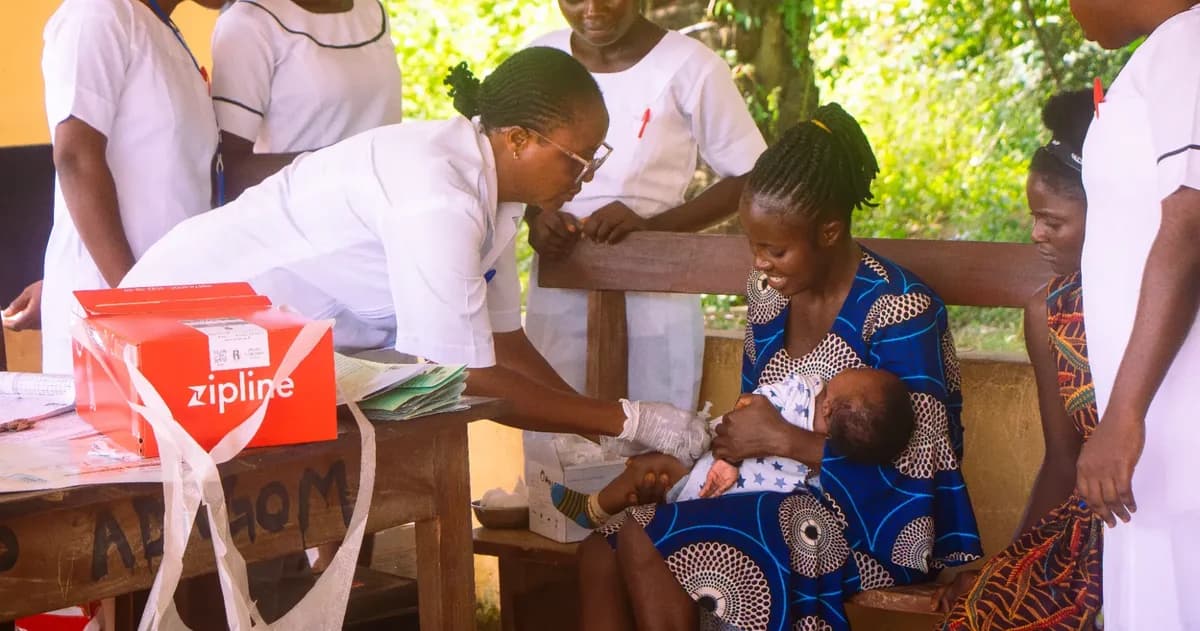
Côte d’Ivoire is taking another step towards technology-driven healthcare as the government approves an eight-year partnership with Zipline to expand its AI-powered medical delivery network across the country.
The partnership will increase Zipline’s network from one distribution centre in Daloa to 10 centres nationwide. Once fully deployed, the network is expected to reach more than 2,200 health facilities and provide access to essential healthcare products for more than 12 million people.

The expansion is being led by Côte d’Ivoire’s Ministry of Health and is supported partly by a US$150 million pay-for-performance award from the U.S. Department of State. The project is also expected to create hundreds of skilled jobs and expose thousands of students, healthcare workers and community members to AI, robotics and autonomous technology.
The network will deliver blood products, vaccines, essential medicines and emergency supplies to communities that may be difficult to reach through traditional transport. This could be particularly important in rural and remote areas where poor road conditions and heavy rainfall can delay deliveries.
Zipline has already been operating in Côte d’Ivoire since 2023. During that period, the company has delivered more than 3.55 million medical products to over 220 health facilities across five regions. The deliveries have included around two million vaccine doses and 20,500 units of blood products, with the company estimating that the service has contributed to 2,058 equivalent lives saved.
Each distribution centre will combine warehousing, cold storage, inventory management, autonomous drone delivery and digital tracking. Instead of relying entirely on scheduled road deliveries or keeping large stocks at health facilities, healthcare workers can request products when they are needed.
The system will also give the Ministry of Health real-time visibility into orders, inventory and deliveries. This can help health authorities identify demand, reduce shortages and expired products, protect temperature-sensitive supplies and respond more quickly during emergencies.

The partnership is also designed to build local expertise around drones, AI and autonomous logistics. Zipline says Ivorian teams will receive training in areas including pharmacy, aviation operations, maintenance, logistics, engineering and data management.
The Côte d’Ivoire government will fund the ongoing operations, while the U.S. government will provide upfront infrastructure funding to support the expansion. This model is intended to make the network part of the country’s wider healthcare system rather than a temporary technology project.
For Côte d’Ivoire, the expansion represents more than faster delivery. It creates an opportunity to connect healthcare infrastructure with AI, robotics and local technical skills while improving how essential medical supplies reach facilities across the country.
At TheGreyIT, we believe technology becomes more valuable when it solves everyday problems and reaches people who need it most.
Recent Blogs

Can Nigeria’s Digital Economy Grow Without Leaving Sustainability Behind?
By THEGREYIT
September 25, 2026
Could Côte d’Ivoire’s AI-Powered Drone Network Transform Healthcare Delivery?
By THEGREYIT
September 24, 2026

Could Afreximbank and ATDC’s $500 Million Deal Transform African Trade?
By THEGREYIT
September 23, 2026
Africa Go Green Fund Doubles Down on Spiro With Additional $18 Million
By THEGREYIT
September 22, 2026